
Emissions-related breakdowns are one of the biggest causes of unplanned downtime for commercial fleets. A single aftertreatment fault can trigger a derate, limit vehicle performance, delay deliveries, and create costly repair events.
For fleet maintenance teams managing multiple trucks across different makes and engine platforms, quickly identifying the root cause of an emissions issue is critical. Modern truck diagnostic tools help reduce downtime by providing fault code visibility, aftertreatment diagnostics, guided troubleshooting, and training resources that enable technicians to make faster repair decisions.
Why emissions faults create costly downtime
Modern diesel engines rely on complex emissions systems that include:
- Diesel particulate filters (DPFs)
- Diesel exhaust fluid (DEF) systems
- Selective catalytic reduction (SCR) components
- NOx sensors
- EGR systems
- Temperature and pressure sensors
When one component fails, it often triggers a chain reaction of fault codes and performance issues.
Many fleets face challenges such as:
- Technicians spending hours researching fault codes
- Delays waiting for dealer appointments
- Uncertainty about which component actually failed
- Repeated repairs due to incorrect diagnosis
- Trucks entering derate before repairs are completed
Without the right diagnostic information, even experienced maintenance teams can lose valuable time chasing symptoms instead of addressing root causes.
How truck diagnostic tools reduce troubleshooting time
The best truck diagnostic tools do much more than simply display fault codes.
Modern platforms provide maintenance teams with detailed information about:
- Fault code descriptions
- Possible causes
- Associated symptoms
- Severity levels
- Recommended next diagnostic steps
Instead of manually searching service information, technicians can immediately begin troubleshooting with relevant information available inside the diagnostic platform.
This faster access to information helps reduce vehicle downtime and improves technician productivity.
Faster aftertreatment diagnostics
Aftertreatment systems are often responsible for some of the most difficult emissions-related faults.
Common issues include:
- Excessive DPF soot accumulation
- Failed regenerations
- DEF quality problems
- SCR efficiency faults
- NOx sensor failures
- EGR flow issues
Dedicated aftertreatment diagnostics allow technicians to monitor critical system parameters in real time, including:
- DPF soot load
- DPF ash load
- Exhaust temperatures
- DEF levels
- NOx sensor readings
- EGR valve position
- SCR performance data
By viewing live operating conditions, maintenance teams can quickly determine whether the issue is a failed component, a sensor problem, or a system operating condition.
This reduces unnecessary parts replacement and shortens repair times.
Cross-make coverage simplifies fleet maintenance
Mixed fleets create unique diagnostic challenges.
A fleet may operate trucks powered by:
- Cummins
- Detroit Diesel
- PACCAR
- Volvo
- Mack
- International
Without broad coverage, technicians may need multiple software subscriptions and diagnostic tools to service the entire fleet.
A diagnostic platform with cross-make support allows technicians to work from a single solution when diagnosing emissions faults across multiple manufacturers.
Benefits include:
- Reduced software costs
- Less technician training time
- Consistent workflows
- Faster troubleshooting
- Simplified fleet maintenance operations
For fleets managing vehicles from several OEMs, this can significantly improve maintenance efficiency.
Built-in training resources improve technician performance
One of the biggest challenges facing fleet maintenance operations today is technician development.
Not every technician has years of emissions system experience. When troubleshooting guidance is unavailable, diagnostic time increases and repair accuracy decreases.
Modern truck diagnostic tools increasingly include training resources for diagnostics directly within the platform.
Examples include:
- Step-by-step troubleshooting procedures
- Guided repair recommendations
- Fault-specific explanations
- System operation education
- Diagnostic best practices
These resources help technicians learn while they work.
Instead of relying solely on tribal knowledge or external documentation, maintenance teams gain access to practical guidance that improves diagnostic consistency across the organization.
Live data helps prevent future breakdowns
Reducing downtime is not only about fixing trucks faster.
It’s also about identifying issues before they become roadside failures.
Live data monitoring allows technicians to identify warning signs such as:
- Rising DPF soot levels
- Weak NOx sensor performance
- EGR valve abnormalities
- Increasing exhaust restriction
- Regeneration failures
By catching these issues early, fleets can schedule repairs during planned maintenance windows instead of responding to unexpected breakdowns.
This proactive approach supports long-term unplanned downtime prevention strategies.
Diagnostic commands speed up repair verification
After completing repairs, technicians need confidence that the problem has been resolved.
Advanced truck diagnostic tools often include service commands that help verify repairs, such as:
- Forced DPF regenerations
- SCR performance tests
- Aftertreatment resets
- Derate resets
- DPF replacement procedures
- Sensor validation tests
These functions allow maintenance teams to confirm repairs before returning trucks to service.
As a result, fleets experience fewer repeat visits and less downtime caused by unresolved emissions issues.
Supporting a more efficient fleet maintenance strategy
A modern fleet maintenance software solution should help teams accomplish three key objectives:
Diagnose faster
Quickly identify the root cause of emissions faults using fault code information, live data, and guided troubleshooting.
Repair with confidence
Use integrated service functions and repair guidance to validate repairs and reduce repeat failures.
Prevent future downtime
Monitor system health and identify developing issues before they lead to roadside breakdowns or costly derates.
When these capabilities work together inside a single diagnostic platform, maintenance teams can significantly improve fleet uptime.
Choosing the right truck diagnostic tools
Not all diagnostic solutions provide the same level of support for emissions systems.
When evaluating truck maintenance solutions, look for features such as:
- Comprehensive aftertreatment diagnostics
- Cross-make engine coverage
- Live data monitoring
- Fault code descriptions and guidance
- Built-in training resources
- Service commands and repair verification functions
- Cloud-based reporting and maintenance visibility
These capabilities help maintenance teams reduce troubleshooting time, improve repair accuracy, and keep more trucks operating productively.
Conclusion
Emissions-related faults are unavoidable in today’s diesel trucks, but extended downtime doesn’t have to be.
Modern truck diagnostic tools give fleet maintenance teams the visibility, guidance, and service capabilities needed to diagnose problems faster and repair them correctly the first time.
By combining aftertreatment diagnostics, cross-make coverage, live data, and integrated training resources, fleets can reduce unplanned downtime, improve technician efficiency, and maximize vehicle availability across their operation.
For fleets focused on uptime, investing in the right diagnostic platform is no longer optional. It’s a critical part of an effective maintenance strategy.
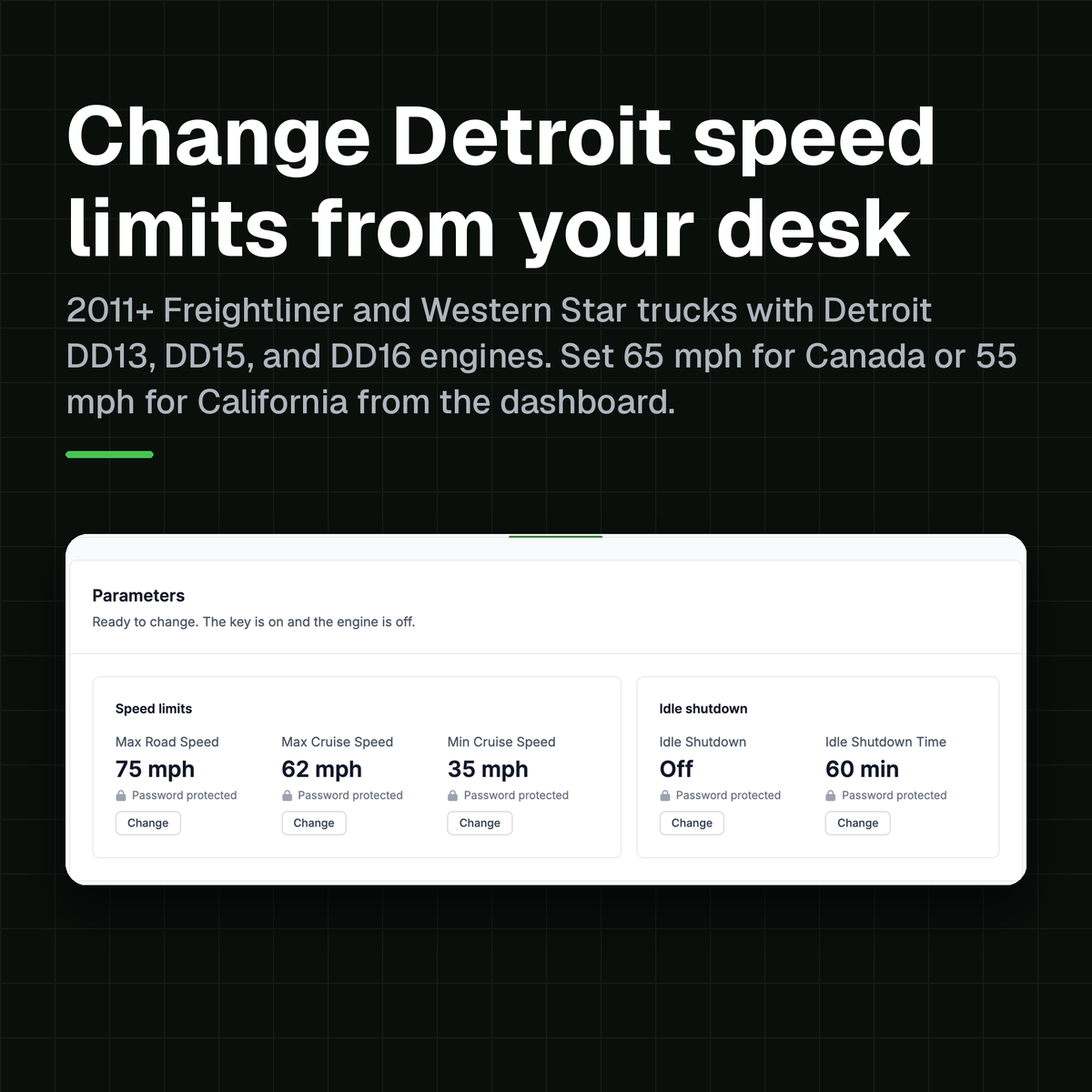
On a fleet, a derate is a tow you could have seen coming. OTR Remote Diagnostics puts a module in each truck's diagnostic port. It reports the fault the moment it logs, shows the derate level on your dashboard, and lets you reset it from your desk once the cause is fixed.

10 must-have features for aftertreatment diagnostics
Why you shouldn't delete your diesel truck (and what to do instead)