
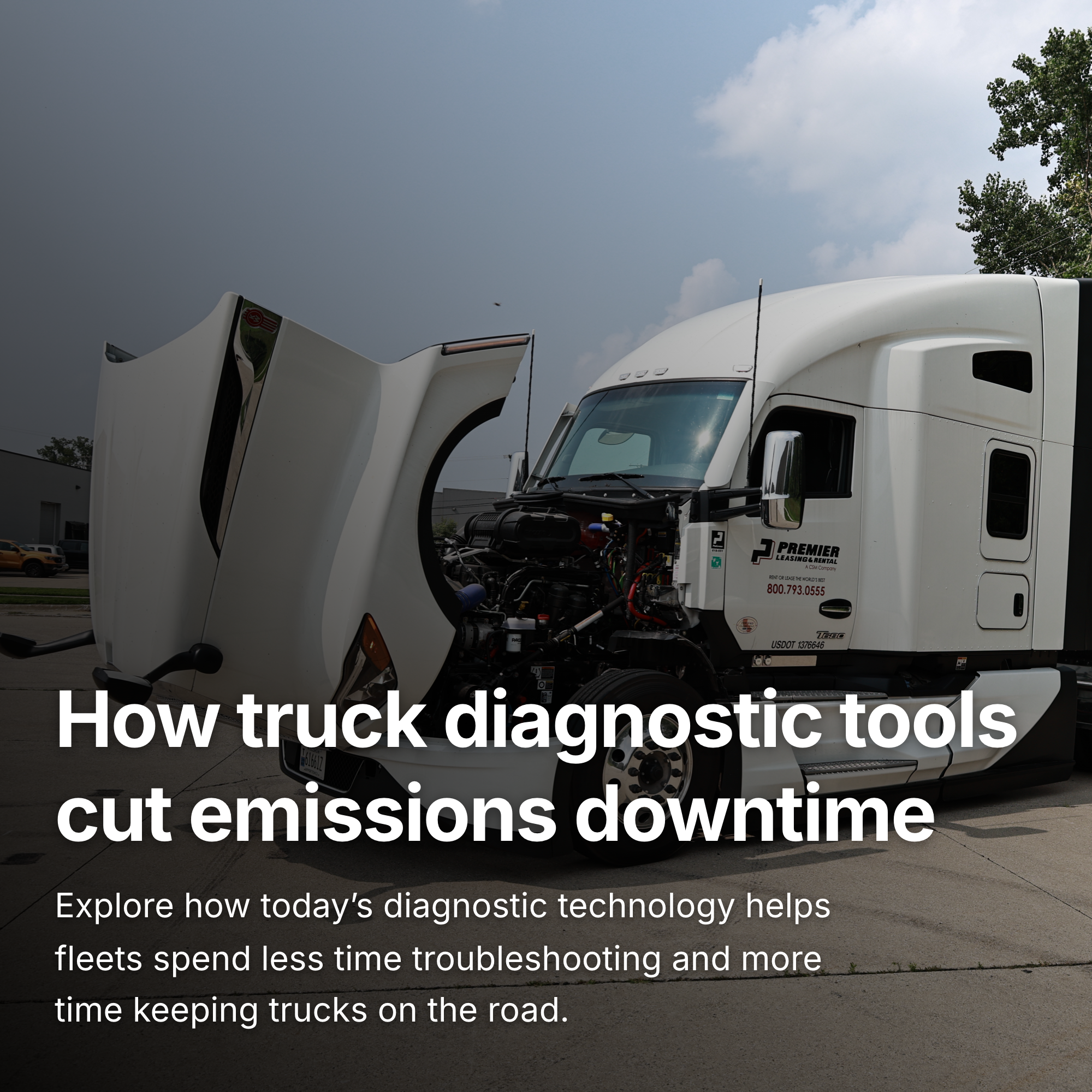
Aftertreatment problems are one of the biggest causes of downtime for owner-operators and fleet maintenance teams. A failed NOx sensor, clogged DPF, DEF quality issue, or derate can quickly turn into missed loads, expensive service calls, and trucks sitting on the side of the road.
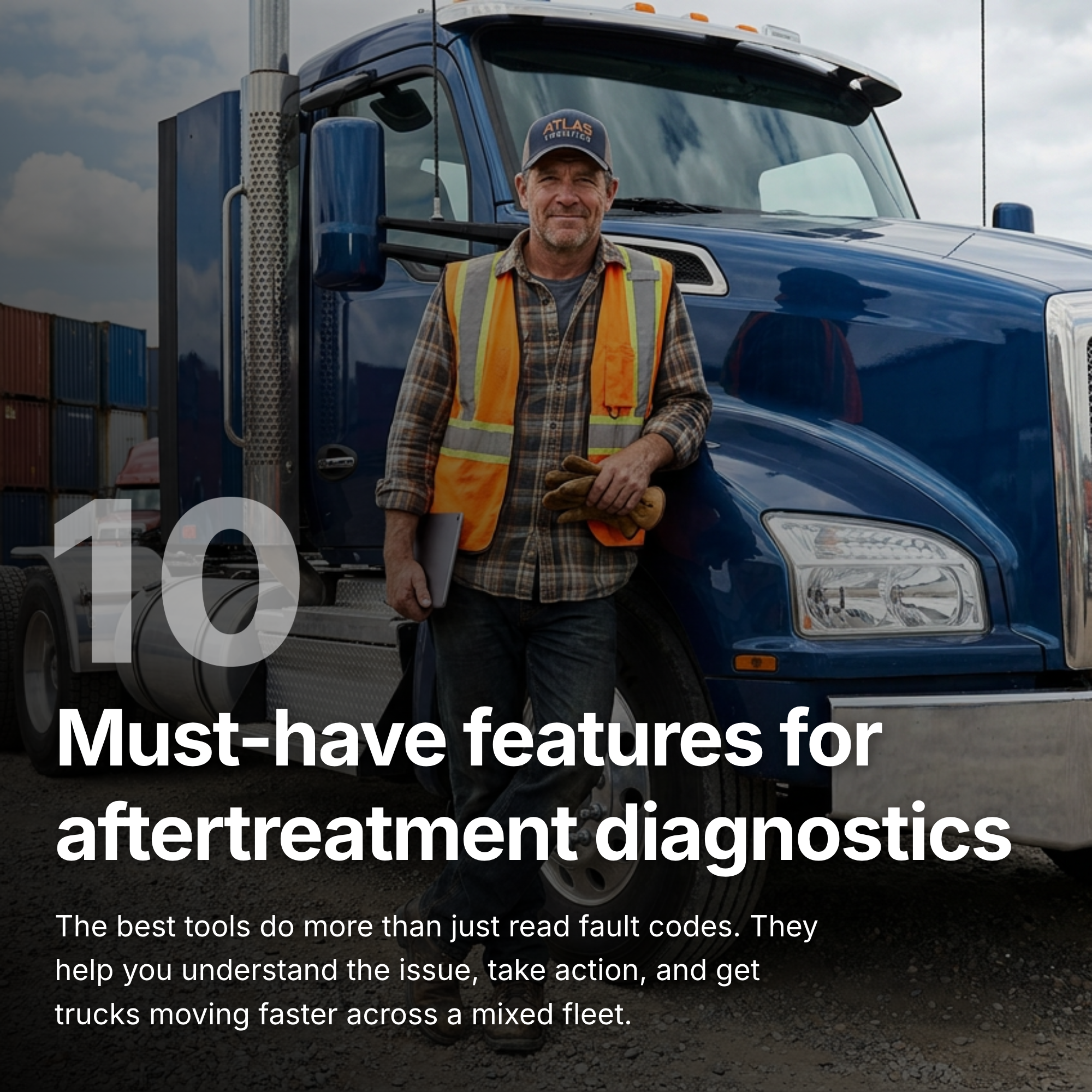
That’s why choosing the right truck diagnostic software for aftertreatment matters. The best tools do more than just read fault codes. They help you understand the issue, take action, and get trucks moving faster across a mixed fleet.
Here are 10 must-have features every modern aftertreatment diagnostic platform should include.
1. OEM level fault code reading
A basic scan tool is not enough for modern emissions systems.
Your diagnostic platform should pull OEM level fault codes with full SPN, FMI, and manufacturer specific information from engines like Cummins, Detroit, PACCAR MX, Volvo, and Mack.
This matters because generic readers often miss critical details tied to aftertreatment systems.
A strong mixed fleet diagnostic solution should help users quickly identify:
- DPF efficiency faults
- DEF quality issues
- SCR efficiency problems
- NOx sensor failures
- EGR related derates
- Temperature sensor faults
The faster technicians understand the exact fault, the faster they can start aftertreatment fault troubleshooting.
2. Forced DPF regen capability
One of the most important features in any aftertreatment diagnostics platform is the ability to run a forced DPF regen.
When soot levels climb too high, trucks can enter power reduction or full derate. Sending every truck to a dealer for a parked regen wastes time and money.
A quality diagnostic platform should allow users to:
- Start a forced regen
- Monitor temperatures during the regen
- Watch soot levels in real time
- Confirm the regen completed successfully
For fleets managing multiple truck brands, having this functionality in one platform is critical.
3. Derate reset functions
A fault code alone is not the problem. The real problem is often the derate that follows.
Modern truck diagnostic software for aftertreatment should support derate resets when repair conditions are met. This allows technicians to restore normal operation without waiting on dealership scheduling.
This is especially valuable for:
- Roadside troubleshooting
- Remote fleet management
- Owner operators running tight delivery schedules
- Small shops supporting multiple engine platforms
Without reset capabilities, even small emissions issues can create major downtime.
4. Live aftertreatment data monitoring
Fault codes only tell part of the story.
The best fleet maintenance tools provide live data so users can see exactly what the truck is doing in real time.
Important aftertreatment parameters include:
- DPF soot level
- DPF ash load
- DEF quality percentage
- SCR inlet and outlet temperatures
- Exhaust temperatures
- NOx sensor readings
- EGR valve position
- Boost pressure
- Differential pressure readings
Live data helps technicians verify repairs, identify intermittent issues, and catch problems before they become breakdowns.
5. Mixed fleet coverage
Most fleets are not running one engine platform.
A proper mixed fleet diagnostic solution should support multiple OEMs within one system. Technicians should not need separate software, adapters, subscriptions, or laptops for every truck brand.
The ideal platform supports:
- Cummins
- Detroit Diesel
- PACCAR MX
- Volvo
- Mack
This simplifies training, lowers costs, and speeds up diagnostics across the fleet.
6. Clear fault code explanations
Many technicians and drivers do not have time to decode complex OEM fault descriptions.
Modern aftertreatment diagnostics platforms should explain fault codes in plain language.
Instead of only displaying:
SPN 4364 FMI 18
The software should explain:
High soot level detected in the DPF. Truck may require a parked regen or inspection for restricted airflow.
Clear explanations help:
- Reduce guesswork
- Improve repair confidence
- Speed up troubleshooting
- Support less experienced technicians
This is especially important for owner operators handling repairs themselves.
7. In app repair guidance
The best diagnostic software is becoming more than a scan tool. It is becoming a maintenance guidance platform.
Technicians benefit from built in repair workflows that explain:
- Common causes of the fault
- Recommended inspection steps
- What live data values to verify
- When a sensor likely needs replacement
- Whether the issue may be wiring related
- What conditions must be met before resetting codes
Integrated diagnostic training resources can help newer technicians troubleshoot more efficiently without relying entirely on dealership support.
8. Mobile diagnostics access
Shops are not the only place breakdowns happen.
Modern diagnostic platforms should work from mobile devices so users can diagnose issues directly from the truck, roadside, rest area, or customer location.
Mobile access gives fleets the ability to:
- Read codes instantly
- View live data remotely
- Run commands without hauling equipment
- Help drivers make informed decisions faster
For owner-operators, this flexibility can prevent unnecessary towing or dealer visits.
9. Fast software updates and OEM coverage expansion
Truck emissions systems continue to evolve every year.
Your diagnostic platform should receive regular updates that expand support for newer engines, emissions systems, and repair functionality.
This helps fleets stay compatible with:
- New emissions calibrations
- Updated fault logic
- New model year trucks
- Expanded aftertreatment commands
Without updates, diagnostic tools quickly become outdated.
10. Built in support and training resources
Even experienced technicians run into difficult emissions issues.
Strong diagnostic platforms include support resources that help users troubleshoot faster, including:
- Video walkthroughs
- Troubleshooting articles
- Guided repair steps
- Technical support access
- Fault specific recommendations
This combination of software plus training creates a stronger long term maintenance strategy.
For mixed fleets with limited in house diagnostic expertise, these diagnostic training resources can significantly reduce downtime.
What to look for in truck diagnostic software for aftertreatment
Not all diagnostic platforms are built the same.
Some tools only read generic codes. Others provide deep OEM level functionality designed specifically for aftertreatment fault troubleshooting across mixed fleets.
When evaluating software, prioritize platforms that combine:
- OEM level diagnostics
- Forced regen capabilities
- Derate resets
- Live data visibility
- Plain language fault explanations
- Maintenance guidance tools
- Mixed fleet support
For fleets and owner-operators managing modern emissions systems, the right aftertreatment diagnostics platform can quickly pay for itself through fewer breakdowns, faster troubleshooting, and reduced dealership dependency.

Understanding 'Reset Fault Codes: Causes, Consequences, and Quick Fixes
How Truck Diagnostic Tools Cut Emissions Downtime